


Ensuring safety and protecting employees’ health is no longer optional in Switzerland: CFST Directive 6508 and the MSST system now impose a demanding framework on all companies, from micro-businesses to high-risk industrial sites.
This page brings together everything you need to understand your obligations, assess your risks and implement a sustainable prevention approach. You will discover how a comprehensive occupational health and safety management concept, combined with a structured audit and an action plan, ensures legal compliance while improving your organisation’s performance.
Whether you are looking for an initial overview or specific solutions for French-speaking Switzerland, this guide will direct you to the essential resources, tools and expertise. Take the first step towards a proactive safety culture and benefit from expert support to turn regulatory obligations into genuine drivers of responsible, lasting and sustainable growth.

Your advantages with SafetyFirst

Interactive training

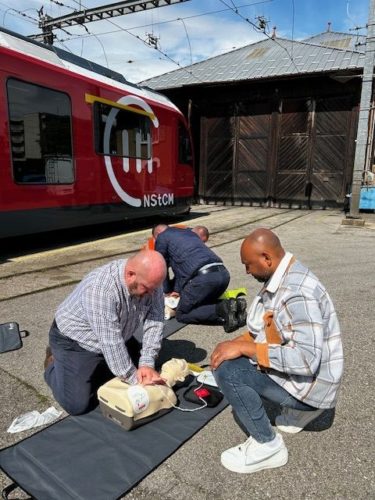
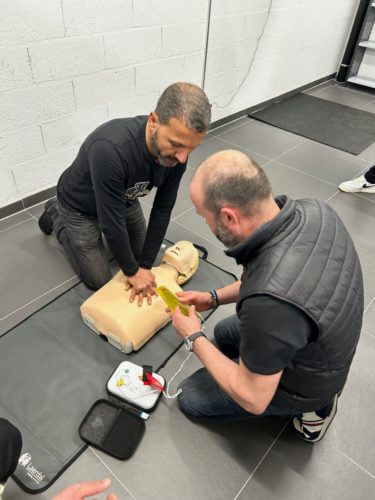
Our training courses combine interactivity and practice for a dynamic and engaging safety learning experience.

Customised training

We value your time: courses are scheduled around your availability to minimise operational disruption.

Certified Training

We incorporate international safety standards, finely tuned to your company’s local specifics.

Publié sur Google Google
khaled salloum profile picture
khaled salloum
Google star 1Google star 2Google star 3Google star 4Google star 5
C’était une très bonne formation pleine d’informations utiles merci beaucoup
Publié sur Google Google
Maciej Kozłowski profile picture
Maciej Kozłowski
Google star 1Google star 2Google star 3Google star 4Google star 5
Formation très intéressante et instructive. Merci.
Publié sur Google Google
Maiena Arrayet profile picture
Maiena Arrayet
Google star 1Google star 2Google star 3Google star 4Google star 5
Super formation réalisée aujourd'hui en entreprise grâce à Safety First. C'était très intéressent et interactif, avec de réels entraînements.
Publié sur Google Google
Faicel EL MHIRI profile picture
Faicel EL MHIRI
Google star 1Google star 2Google star 3Google star 4Google star 5
Top formation
Publié sur Google Google
Daniela Rodrigues profile picture
Daniela Rodrigues
Google star 1Google star 2Google star 3Google star 4Google star 5
cyril et steve au top!
Publié sur Google Google
Richard Erick Song profile picture
Richard Erick Song
Google star 1Google star 2Google star 3Google star 4Google star 5
great explanation and demonstration
Publié sur Google Google
Jade Abrial profile picture
Jade Abrial
Google star 1Google star 2Google star 3Google star 4Google star 5
Super expérience encore merci pour cette super formation
Publié sur Google Google
Said Moumini profile picture
Said Moumini
Google star 1Google star 2Google star 3Google star 4Google star 5
Excellent formation.

What Is Occupational Health and Safety?

Definition and challenges for Swiss companies

Occupational health and safety encompasses all measures designed to protect employees from accidents, occupational diseases and psychosocial risks. In Switzerland, CFST Directive 6508 requires every employer to implement a structured prevention system adapted to the size of the company and the hazards involved.
Beyond the legal framework, an effective occupational health and safety policy reduces absenteeism, improves productivity and strengthens the organisation’s reputation among partners, clients and insurers.

To understand who is responsible for what and prepare for inspections, consult our 2025 guide to occupational safety stakeholders in Switzerland (Suva, SECO, CFST/EKAS and cantonal inspections).

Difference between occupational safety and health protection

Occupational safety focuses on preventing accidents and controlling immediate physical hazards, whereas health protection also covers factors that may affect physical or psychological well-being in the long term, such as stress, musculoskeletal disorders and exposure to chemical agents.

The two aspects are inseparable: without a safe environment, well-being cannot be sustained, while without consideration for overall health, accident prevention remains incomplete.

Human and economic impact of occupational accidents

Every year, Swiss companies report several hundred thousand occupational accidents, some of which result in serious injuries or permanent incapacity. These events lead to high direct costs for insurers and even greater indirect costs for employers: lost productivity, team disorganisation, recruitment or training of temporary staff and reduced employee motivation.
At the human level, the consequences include suffering, physical after-effects and family tragedies, highlighting the importance of proactive and systematic prevention.

SafetyFirst by the numbers

+ 0

Certified trainers, ready to deliver training courses.

0 %

Success rate of training participants.

0 /5

Average rating given by participants.

+ 0

Companies trained in health and safety at work.

+ 0

Certified trainers, ready to deliver training courses.

0 %

Success rate of training participants.

0 /5

Average rating given by participants.

+ 0

Companies trained in health and safety at work.

Legal Requirements in Switzerland: CFST Directive 6508 and the Regulatory Framework

In Switzerland, all employers have legal obligations regarding the occupational health and safety of their employees.

CFST Directive 6508 in detail

Issued by the Federal Coordination Commission for Occupational Safety, Directive 6508 requires employers to implement a health and safety management system proportionate to the hazards present. It defines ten key elements: risk assessment, emergency organisation, training, monitoring of measures, documentation, regular reviews, etc. Every company must demonstrate that it manages these elements, either through a recognised industry-specific MSST solution or an individual solution adapted to its specific risks.

Ordinance on Accident Prevention (OPA)

Complementing the Labour Act, the OPA sets out the technical and organisational requirements intended to prevent occupational accidents and diseases. Article 11a OPA refers directly to CFST Directive 6508: it requires employers to call in occupational safety specialists when worker protection cannot be guaranteed using their own resources.

When is your company affected?

The following are affected:

  • All companies with ten or more employees exposed to particular hazards.
  • Companies without particular hazards employing 50 or more people.
  • Smaller organisations that, following an assessment, nevertheless present specific risks, such as chemicals, work at height or complex machinery.
 

Table of requirements according to company size and particular hazards

Risk Company size, number of employees Engagement of occupational safety specialists Safety system and organisation

Appropriate regulation of responsibilities and procedures relating
to occupational safety and health protection

Companies with particular hazards
according to Annex 1
10 or more (3.1) Justification for engaging specialists or for the measures taken1) Justification of the organisation
fewer than 10 (3.2) Justification for engaging specialists or for the measures taken using simple means1)  
Companies without particular hazards
according to Annex 1
50 or more (3.3) Engagement optional Justification of the organisation
fewer than 50 (3.4) Engagement optional  


Penalties and consequences of non-compliance

In the event of non-compliance, the cantonal labour inspectorate may issue a warning, require measures to be implemented within a specified period or order the suspension of dangerous activities. Accidents occurring without an adequate MSST system may lead to higher insurance costs, administrative fines and, in cases of gross negligence, criminal proceedings against the employer. Beyond the financial impact, the company’s reputation may be affected over the long term and employee trust may be compromised.

The MSST System: Structure and Implementation

The MSST system (involving occupational physicians and other occupational safety specialists), compliant with CFST Directive 6508, is based on ten complementary elements implemented through inter-company or individual solutions in order to ensure effective prevention and continuous improvement of occupational health and safety.

The 10 elements of the MSST system defined by CFST Directive 6508 form the foundation of your safety organisation: safety policy, organisation, training, information, planning, implementation, monitoring, continuous improvement, documentation and employee participation.

> Discover each MSST element and the specific implementation requirements in detail →

The 10 elements of the MSST system

  1. Guiding principles and safety objectives
    A clear commitment from management to occupational safety and health, with objectives and priorities defined.
  2. Safety organisation
    Allocation of the responsibilities, skills and resources required to implement safety measures.
  3. Training, instruction and information
    Raising awareness, providing ongoing training and informing employees about risks and safe behaviour.
  4. Safety rules and instructions
    Developing and communicating internal rules and procedures adapted to the activities and risks.
  5. Hazard identification and risk assessment
    Systematic analysis of work situations to detect hazards and assess risks.
  6. Planning and implementation of measures
    Defining, applying and monitoring technical, organisational and individual prevention measures.
  7. Emergency preparedness and organisation
    Establishing an effective emergency organisation, including first aid, fire safety, evacuation and alarms.
  8. Employee participation
    Actively involving employees in identifying risks, prevention and improvement proposals.
  9. Documentation and reporting
    Keeping safety-related documentation up to date, including analyses, measures, incidents and training.
  10. Review and continuous improvement
    Regularly evaluating the system, conducting internal audits and making ongoing adjustments to strengthen occupational safety and health.

These ten components form the “framework” of MSST and must be planned, documented and regularly reassessed.

Available MSST solutions

To meet the requirement to engage specialists, two main implementation approaches are available:

  • Inter-company solutions
    – Industry-specific solution: sector manual, checklists, training and an exchange forum.
    – Group solution: sharing of good practices and resources for multi-site companies.
    – Standard solution: turnkey package provided by a consulting firm, integrating processes, training and monitoring.
  • Individual solution
    – Tailored design of the MSST system, adapted to the company’s specific characteristics and risks.
    – Requires specialists to be called in periodically or continuously for each MSST element.


Benefits of a well-structured MSST system

  1. Proactive prevention of incidents and occupational diseases
  2. Regulatory consistency ensuring compliance with CFST 6508 and the OPA
  3. Measurable reductions in absenteeism, insurance costs and SUVA premiums
  4. Stronger employee engagement through participation and training
  5. Continuous improvement through regular reviews and performance indicators

A complete MSST system, whether inter-company or individual, therefore promotes business continuity, operational efficiency and optimal protection of occupational health and safety.

We're here to give you personalised help.

Fill in this form and our team will guide you towards the ideal option for your requirements.

Occupational Risk Audit and Assessment

Importance of the initial occupational safety audit

The initial occupational safety audit is the essential first step for any company seeking to manage its occupational risks. It provides an accurate overview: identifying weaknesses, mapping particular hazards such as chemicals, work at height and machinery, and verifying compliance with CFST Directive 6508. A thorough audit supports proactive prevention, significantly reduces the number of accidents and provides the basis for developing a tailored occupational health and safety action plan.

Methodology for analysing particular hazards

The methodology is based on a three-phase approach: MSST audit

  • On-site assessment: on-site visits to observe workstations, practices and equipment, together with interviews with employees and safety managers.
  • Quantitative and qualitative assessment: use of risk-rating grids (severity × frequency), document analysis including safety data sheets and incident registers, and benchmarking of industry good practices (industry-specific MSST solution versus individual solution).
  • Prioritisation and action plan: ranking hazards by criticality, defining corrective actions including technical measures, organisational measures and training, preparing a budget estimate and setting an implementation schedule.

Audit frequency and monitoring

To ensure the ongoing effectiveness of the occupational health and safety system, the initial audit must be supplemented regularly:

  • Short-term monitoring (6–12 months): checking progress on corrective measures and making rapid adjustments.
  • Full audit (every 3 years): remapping hazards, reassessing overall compliance with CFST Directive 6508 and incorporating regulatory changes.
  • Ad hoc checks: after any incident or major change, such as a new process or the acquisition of high-risk equipment, to respond immediately and maintain the prevention process.

These good practices in auditing and structured assessment ensure a robust occupational health and safety approach, while directing users to our dedicated page on the MSST occupational safety audit for expert, personalised support.

Developing a Comprehensive Safety Concept

What is an occupational safety concept?

An occupational safety concept is a structured system that defines the principles, responsibilities and procedures intended to prevent occupational risks. It is based on hazard analysis, the identification of critical workflows and the implementation of technical, organisational and training-related measures. This concept serves as a reference for all prevention activities, ensuring a consistent approach that complies with CFST Directive 6508.

Integration into the company culture

Integrating safety into everyday work means making prevention a shared value embraced by all employees. This involves:

  • Appointing internal safety contacts trained in occupational health and safety good practices
  • Holding regular awareness sessions to maintain focus on key issues
  • Management involvement through measurable objectives and an occupational health and safety dashboard
  • Systematic lessons learned after every incident or exercise

This approach promotes collective ownership, reduces resistance to change and strengthens everyone’s commitment. MSST concept

Action plan and continuous improvement

The occupational health and safety action plan consists of several stages:

  1. Developing an implementation schedule for corrective measures, including technical measures, training and organisation
  2. Introducing key indicators, such as accident rates, compliance indicators and training monitoring
  3. Holding quarterly management review meetings and occupational health and safety committees to assess progress
  4. Conducting interim audits every 6 to 12 months to adjust priorities
  5. Updating the concept based on field feedback, regulatory developments and new technologies

This PDCA cycle (Plan–Do–Check–Act) ensures continuous improvement, turning your safety concept into a genuine driver of performance and compliance.

Key Occupational Safety Stakeholders

SUVA: Prevention and insurance

SUVA combines accident insurance, prevention and enforcement for industry, skilled trades and construction. It funds training, develops industry-specific directives and may penalise non-compliant companies.

SECO: Federal oversight

SECO oversees the application of the Labour Act and the OPA in the service sectors, including offices, retail and other services, coordinating the work of the cantonal inspections.

Cantonal inspections: Local enforcement

Each canton has inspectors who conduct on-site MSST inspections, with approaches varying by region, from support in Vaud to a stricter approach in Geneva.

CFST: Strategic coordination

The Federal Commission develops directives, including Directive 6508, approves industry-specific solutions and arbitrates between organisations.

MSST by Canton: Local Specificities

MSST compliance in Geneva

In the canton of Geneva, every company exposed to particular hazards or employing at least ten people must comply with CFST Directive 6508 through the MSST system. Employers are required to appoint a safety contact (PERCO training) and call on MSST specialists, including occupational physicians, hygienists and engineers, to:

  • Develop and document the safety charter and occupational health and safety objectives
  • Establish an appropriate safety organisation
  • Conduct a risk assessment and an initial audit
  • Formalise an action plan and regular monitoring
    The Geneva labour inspectorate may require an additional audit and impose penalties in the event of missed deadlines.

MSST support in the canton of Vaud

Through the Directorate-General for Employment and the Labour Market, the canton of Vaud provides tools and advice for achieving MSST compliance. Companies in Vaud concerned by these requirements benefit from:

  • Models of industry-specific solutions, for example in watchmaking and industry
  • Individual solutions for SMEs with specific risks
  • Technical guides on the OPA and the LAA
  • Access to SUVA grants to finance audits and training
    MSST providers registered with the State of Vaud support companies from hazard identification through to the integration of an effective and sustainable occupational health and safety system.

Tailored solutions for French-speaking Switzerland

Across French-speaking Switzerland, two main approaches to implementing MSST coexist:

  1. Industry-specific solutions: sector models approved by the CFST, providing an occupational health and safety manual, checklists and group training.
  2. Individual solutions: a tailor-made MSST system for companies whose risks are not covered by an industry-specific solution or that require a personalised approach.
    Companies choose the most effective option according to their size, sector and the criticality of the hazards. Certified providers in French-speaking Switzerland ensure the rapid integration of the ten elements of the MSST system and provide ongoing support for the continuous improvement of occupational health and safety.

Are you looking to understand how to apply your MSST obligations in practice? Discover our practical step-by-step guide to implementing an MSST system, with downloadable examples, templates and checklists.

Our specialised trainers, such as Cyril Dufour, support your teams in implementing the MSST system.

MSST System FAQ

1What is the difference between an MSST audit and an MSST concept?

An MSST audit is a one-off, precise assessment of risks and compliance with CFST Directive 6508. It identifies hazards, verifies the effectiveness of existing measures and provides a quantified report with a short-term action plan.
The MSST concept, on the other hand, is a comprehensive, sustainable system for managing occupational health and safety, structured around the ten elements of the directive, including the charter, organisation, training and risk assessment. It defines the policy, responsibilities, processes and regular reviews required to ensure continuous improvement.

2Does CFST Directive 6508 apply to my company with eight employees?

Yes. If you expose your employees to particular hazards, such as chemicals, machinery, work at height or biological agents, even with fewer than ten employees, you must call on an MSST specialist and comply with CFST Directive 6508. If there are no particular hazards and you employ fewer than ten people, it is sufficient to implement simplified internal prevention measures within 12 months.

3How much does MSST compliance cost?

The cost varies depending on the company’s size, level of risk and chosen support model:

  • Initial audit: CHF 1,500–2,000 per day, depending on the consultant.
  • Comprehensive MSST concept: a fixed fee of CHF 3,000–6,000 for a standard system, including training and documentation.
  • Industry-specific solutions: CHF 200–800 per company for sector models.
  • SUVA grants: up to 50% of the cost of audits and training for certain industries.
4Can safety management be completely outsourced?

Yes. Outsourcing means assigning all or part of the occupational health and safety function to an external provider, such as a PERCO contact person or specialised organisation. This provides:

  • Ongoing expertise and regulatory compliance
  • Flexibility, with packages that can be adapted to the workload
  • Independence and continuous updates
  • Reduced internal administrative workload
5How do you choose between an industry-specific solution and an individual solution?
  • Industry-specific solution: suitable if your sector has an approved MSST model, such as watchmaking, chemicals or construction. It provides an occupational health and safety manual, checklists and standardised training at a lower cost.
  • Individual solution: necessary if your risks are not covered by an industry-specific solution or if you have specific requirements. It is more expensive but 100% tailor-made, including analyses, procedures and customised training.