
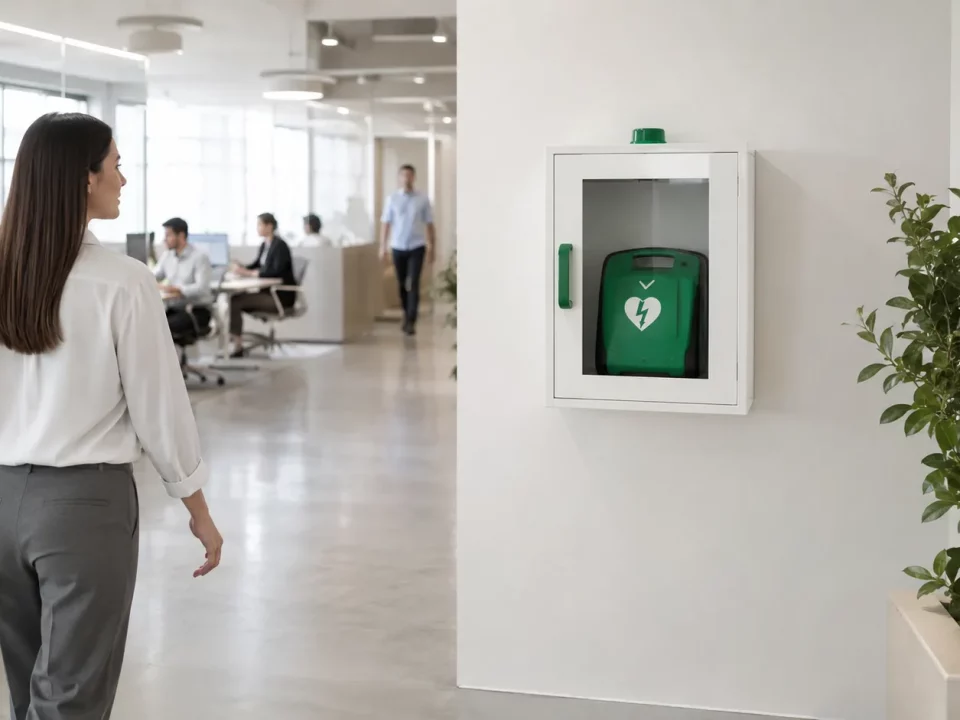
Equip your company or facility with a suitable AED, correctly installed and ready for use in an emergency. SafetyFirst supports you in selecting, supplying, installing and maintaining your AED in French-speaking Switzerland.

Our approach goes beyond simply selling a device. We help you implement a comprehensive cardiac protection solution that is aligned with your environment, your risks and the first-aid arrangements within your facility.

Personalised advice · On-site installation · Maintenance · Employee training

Request a personalised quote →

A complete AED solution

An automated external defibrillator must be easily accessible, clearly identified and kept in working order. SafetyFirst supports you at every stage of your project:

  • analysis of your needs and site configuration;
  • selection of a fully automatic or semi-automatic AED;
  • supply of the device and its accessories;
  • selection of the location;
  • installation of the cabinet and signage;
  • commissioning of the AED;
  • monitoring of batteries and electrodes;
  • on-site maintenance;
  • employee resuscitation training.

This gives you a single point of contact for the equipment, its ongoing maintenance and the preparation of your teams.

Which AED should you choose?

The term AED, short for Automated External Defibrillator, refers to an automated external defibrillator. The device analyses the heart rhythm and indicates whether a shock should be delivered.

The choice of model depends in particular on:

  • the number of people present;
  • whether it will be used indoors or outdoors;
  • temperature and humidity conditions;
  • the possible presence of children;
  • the simplicity of the visual and voice prompts;
  • the service life of the batteries and electrodes;
  • chest compression assistance features;
  • monitoring and maintenance options.

SafetyFirst offers a range of professional devices, including ZOLL and Mindray AEDs, to tailor the solution to companies, schools, sports facilities, shops, public authorities and healthcare facilities.

Discover the available AEDs →

Defibrillator
Publié sur Google Google
khaled salloum profile picture
khaled salloum
Google star 1Google star 2Google star 3Google star 4Google star 5
C’était une très bonne formation pleine d’informations utiles merci beaucoup
Publié sur Google Google
Maciej Kozłowski profile picture
Maciej Kozłowski
Google star 1Google star 2Google star 3Google star 4Google star 5
Formation très intéressante et instructive. Merci.
Publié sur Google Google
Maiena Arrayet profile picture
Maiena Arrayet
Google star 1Google star 2Google star 3Google star 4Google star 5
Super formation réalisée aujourd'hui en entreprise grâce à Safety First. C'était très intéressent et interactif, avec de réels entraînements.
Publié sur Google Google
Faicel EL MHIRI profile picture
Faicel EL MHIRI
Google star 1Google star 2Google star 3Google star 4Google star 5
Top formation
Publié sur Google Google
Daniela Rodrigues profile picture
Daniela Rodrigues
Google star 1Google star 2Google star 3Google star 4Google star 5
cyril et steve au top!
Publié sur Google Google
Richard Erick Song profile picture
Richard Erick Song
Google star 1Google star 2Google star 3Google star 4Google star 5
great explanation and demonstration
Publié sur Google Google
Jade Abrial profile picture
Jade Abrial
Google star 1Google star 2Google star 3Google star 4Google star 5
Super expérience encore merci pour cette super formation
Publié sur Google Google
Said Moumini profile picture
Said Moumini
Google star 1Google star 2Google star 3Google star 4Google star 5
Excellent formation.

On-site AED installation and commissioning

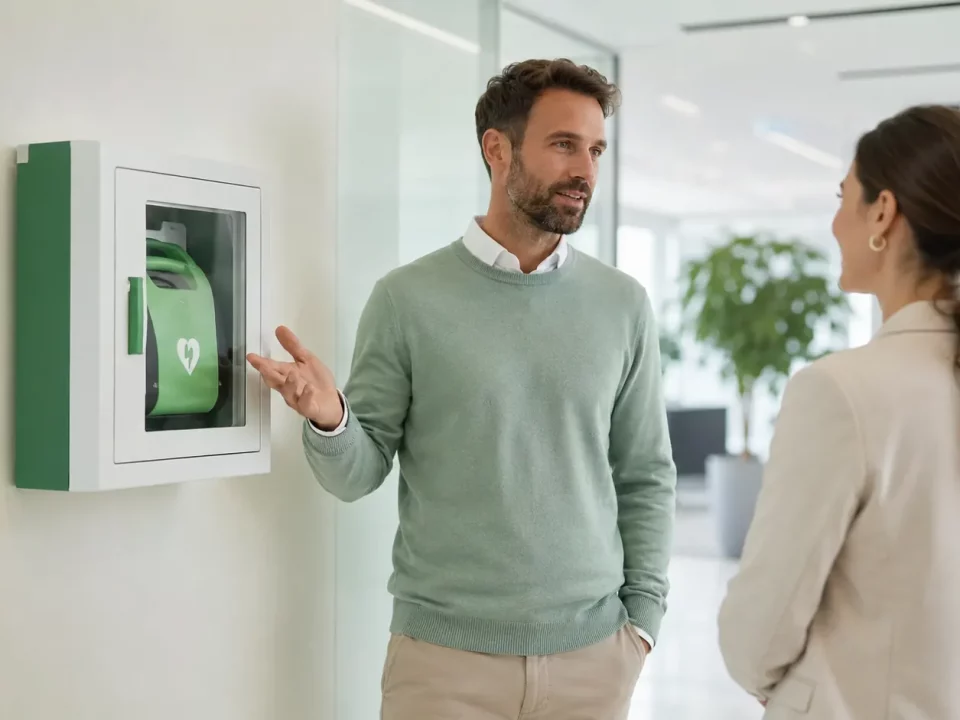
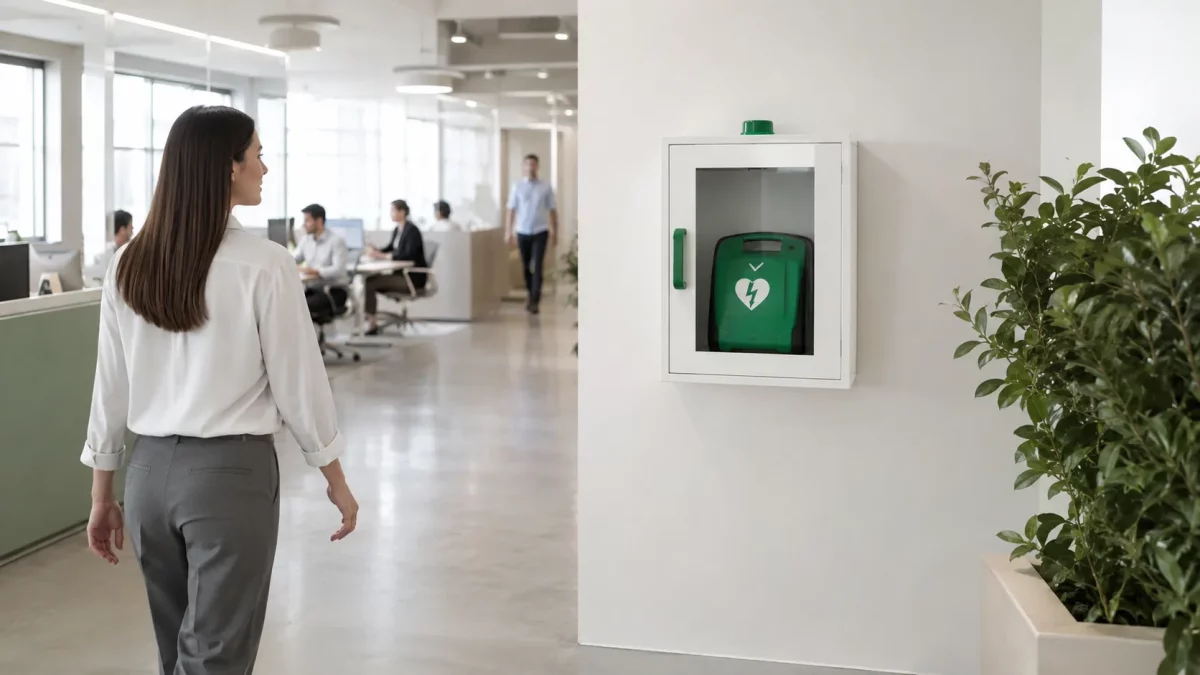
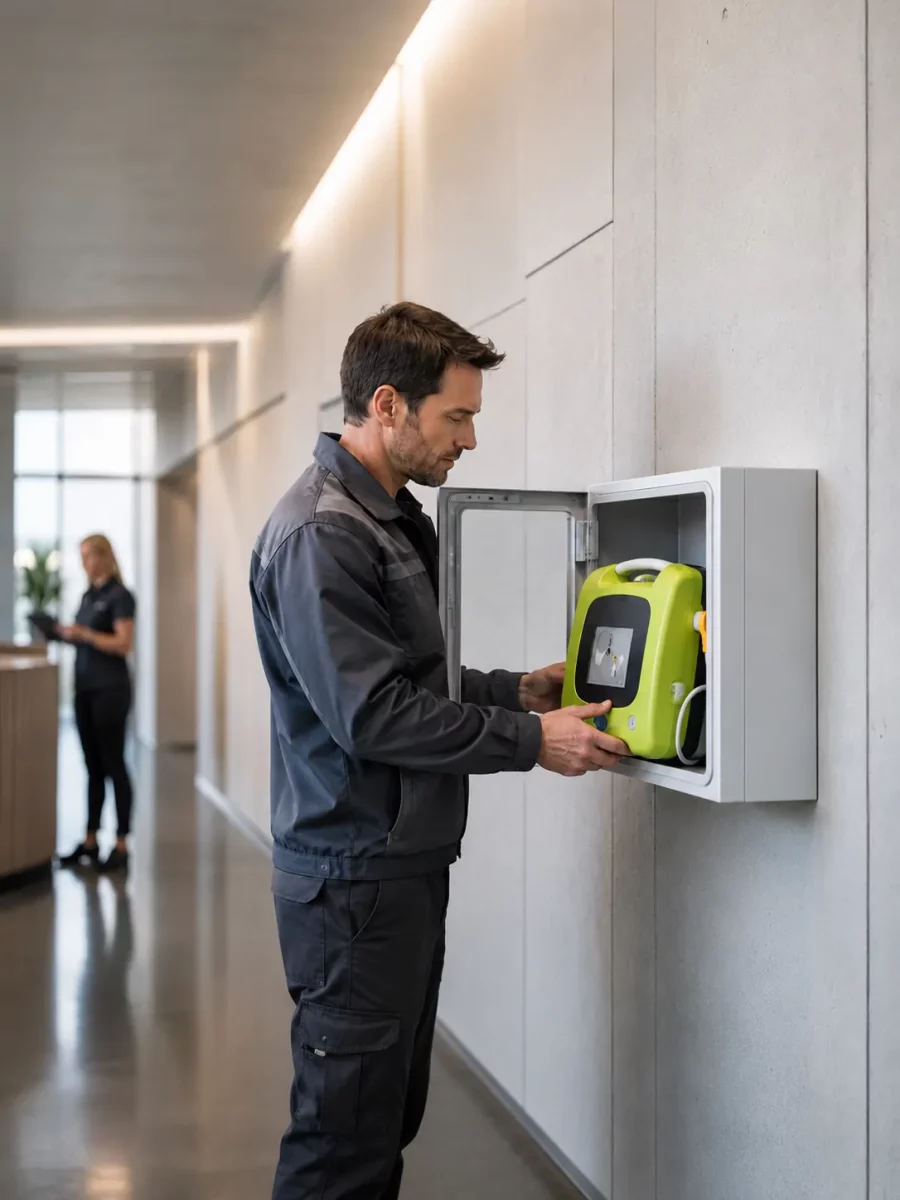
The AED must be located where it can be found quickly and accessed without obstruction. Its location is determined based on the building layout, the number of people using it, high-risk areas and the internal emergency response arrangements.

Depending on the project, installation may include:

  • wall-mounting the AED;
  • installation of an indoor or outdoor cabinet;
  • adding visible signage;
  • checking that the device is accessible;
  • checking the battery and electrodes;
  • recording reference details and expiry dates;
  • briefing the designated personnel on the equipment.

Suitable cabinets and accessories help protect the AED against impact, dust, moisture and temperature fluctuations.

AED maintenance and inspection

The self-tests performed by AEDs do not replace regular equipment inspections. Electrodes and batteries have a limited service life and must be replaced before their expiry date or after use.

Depending on the device and the service selected, maintenance may include:

  • visual inspection of the AED;
  • checking its status indicator;
  • checking the battery;
  • monitoring electrode expiry dates;
  • replacing consumables;
  • checking the cabinet and signage;
  • checking the equipment after use;
  • recording the work performed.

This preventive maintenance helps keep an AED available and operational when an emergency occurs.

Request on-site maintenance or inspection

AEDs, batteries, electrodes and cabinets

SafetyFirst supplies the main equipment required for the installation and ongoing maintenance of your AED:

  • AEDs;
  • replacement batteries;
  • adult electrodes;
  • paediatric electrodes;
  • emergency response kits and pocket masks;
  • protective cabinets;
  • wall mounts;
  • location signage.

The devices and consumables can be ordered from our first-aid equipment shop. For a business project, we recommend a preliminary assessment to select the equipment and accessories that are genuinely suitable for the site.

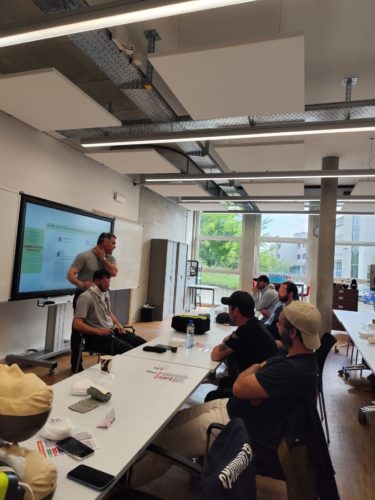
Train your employees to use an AED

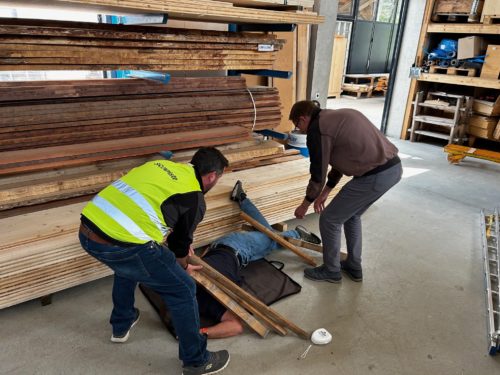
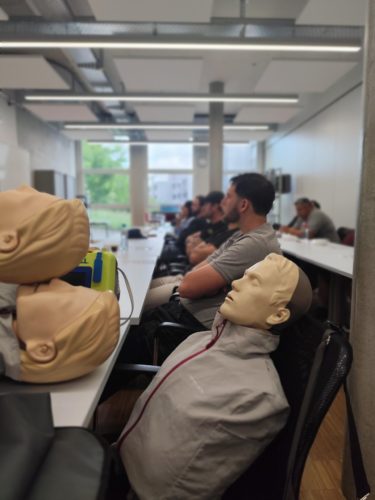
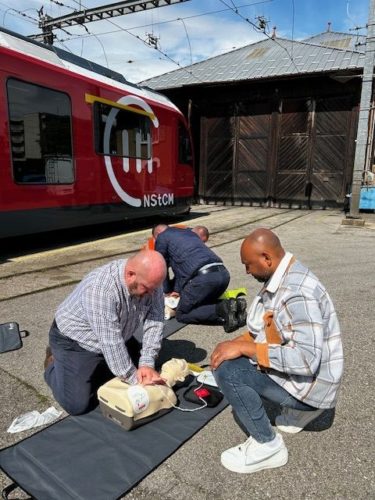
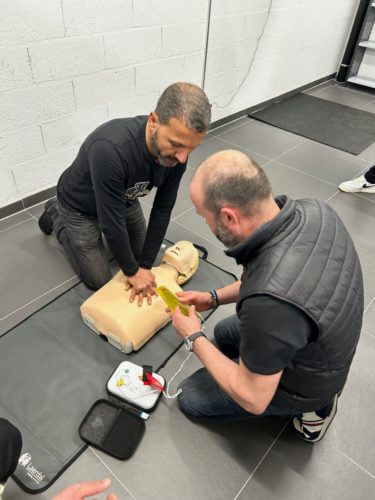
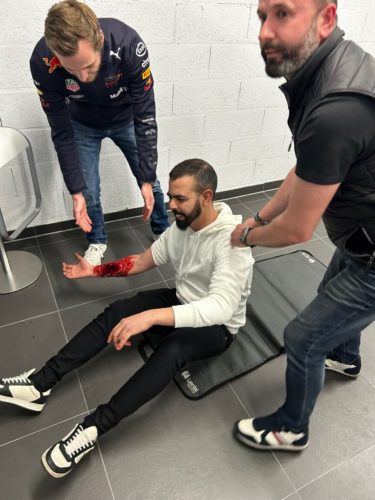
An AED is most effective when employees know how to recognise cardiac arrest, alert the emergency services, start cardiopulmonary resuscitation and use the device without hesitation.

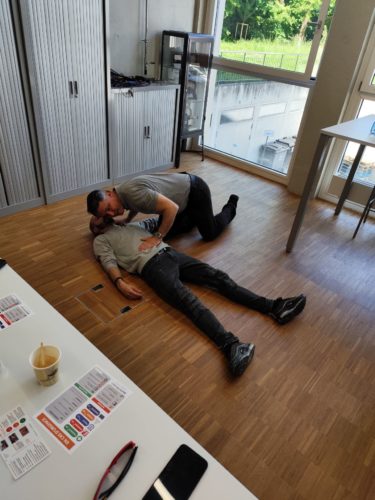
The certified BLS-AED-SRC training teaches participants in particular how to:

  • recognise a cardiorespiratory emergency;
  • call the emergency services on 144;
  • perform chest compressions;
  • position the electrodes;
  • follow the AED prompts;
  • coordinate the response until the emergency services arrive.

For an initial overview, also see our guide explaining how to use an AED in an emergency.

We're here to give you personalised help.

Fill in this form and our team will guide you towards the ideal option for your requirements.

Serving all of French-speaking Switzerland

SafetyFirst supports companies and organisations throughout French-speaking Switzerland: Vaud, Geneva, Fribourg, Neuchâtel, Valais and Jura.

Our services can be provided in Lausanne, Nyon, Morges, Yverdon-les-Bains, Vevey, Montreux, Geneva, Carouge, Meyrin, Fribourg, Bulle, Neuchâtel, La Chaux-de-Fonds, Sion, Martigny and Delémont, as well as in other municipalities throughout French-speaking Switzerland.

Installation, maintenance and training can be combined in a single visit directly at your premises.

Why choose SafetyFirst?

  • A single point of contact for purchasing, installation and ongoing maintenance.
  • Professional AEDs and accessories.
  • A solution adapted to your site and your risks.
  • Services provided directly at your facility.
  • Certified trainers to prepare your employees.
  • Coverage throughout French-speaking Switzerland.

Request a quote for your AED

Would you like to equip a building, replace an older device or arrange maintenance for several AEDs? Tell us about your facility, the number of sites involved and your requirements.

Our team will propose a suitable solution including, depending on your project, the AED, accessories, installation, technical support and employee training.

Request a recommendation and quote

Frequently asked questions about AEDs

1Where should an AED be installed in a company?

The AED should be visible, clearly signposted, quickly accessible and located in an area known to employees. Its location depends on the building layout, the number of occupants and the areas presenting the greatest risks.

2What is the difference between a fully automatic and a semi-automatic AED?

Both types of device analyse the heart rhythm. The fully automatic model delivers the shock itself when necessary. The semi-automatic model requires the user to press a button.


3How often should an AED be inspected?

The frequency depends on the model, the manufacturer's recommendations, the installation conditions and internal monitoring procedures. The condition of the device, battery, electrodes and cabinet should be checked regularly.

4Where are courses open to individuals held?

Locations are listed for each available session. Courses may be offered in Tolochenaz and Mont-sur-Lausanne, among other locations.

5Can SafetyFirst also train our employees?

Yes. SafetyFirst offers certified BLS-AED-SRC training, as well as formats tailored to the needs of companies and delivered directly on site.

Preparing today, protecting tomorrow.

#SafetyFirst #Training #Prevention #Health #Safety

Our advice on defibrillators and workplace safety

29/07/2026

Defibrillator mandatory in Swiss workplaces: what does the law say?

In Switzerland, defibrillators are not mandatory in every workplace. However, employers must organise first aid according to the risks, workforce and access to emergency services. Here is what the law says and how to decide whether your premises should be equipped with an AED.