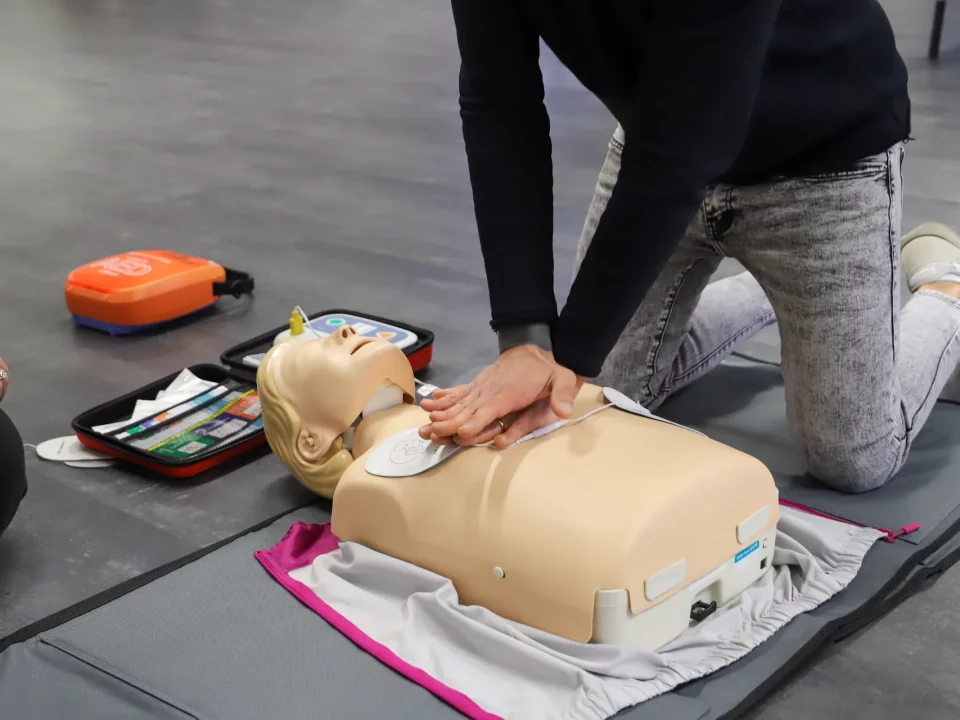
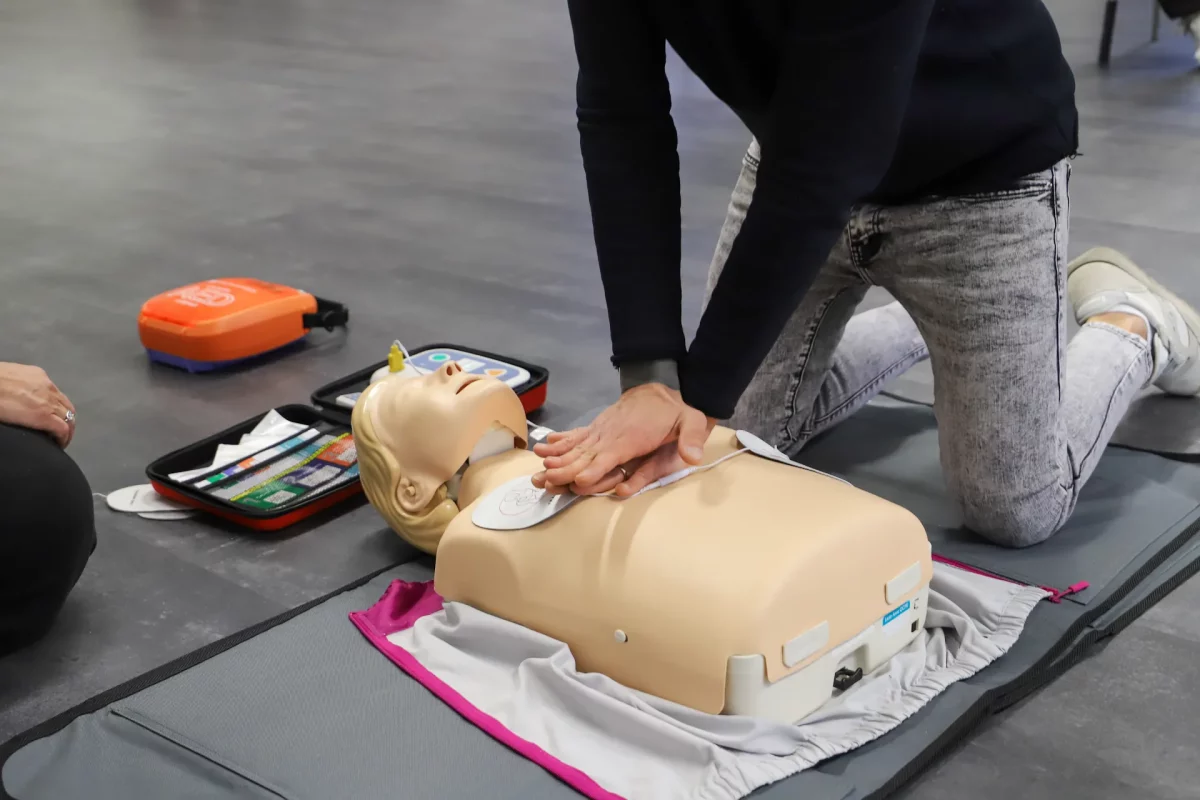
Life-saving skills: learning cardiopulmonary resuscitation techniques
20/08/2024
Practical Guide to Treating a Minor Wound
20/09/2024Learning how to measure vital signs in an emergency
Knowing how to assess vital signs is an essential reflex for anyone trained in first aid. In French-speaking Switzerland, every minute counts when a life is at stake. Recognising life-threatening distress, measuring a pulse, checking breathing or detecting an abnormal temperature makes it possible to act effectively from the very first seconds.
Whether you are a professional, a parent or a concerned citizen, this skill places you at the heart of the chain of survival. This article provides a comprehensive introduction to the basic techniques for learning how to measure vital signs and directs you towards the most suitable training courses, such as the IAS 2 programme or our guide to certified first aid training.
Why knowing how to measure vital signs can save lives
Signs of life-threatening distress to look for
In the event of an accident or sudden illness, vital signs are the first indicators to assess in order to understand the victim’s condition. Abnormal breathing, an irregular pulse or an extreme temperature often indicate a serious emergency. These visible and measurable symptoms make it possible to quickly adapt care while awaiting professional help.
The link between first aid and clinical assessment
In first aid situations, measuring vital signs not only helps ensure the victim’s safety, but also provides valuable information to emergency services. A trained person will be able to assess changes in the victim’s condition, guide emergency procedures and document the vital signs observed: all valuable information for a rapid diagnosis and better coordination with professionals.
What are the main vital signs to monitor?
Heart rate (HR) – How to take a pulse effectively
The pulse is one of the most reliable indicators of cardiac activity. It is generally measured at the wrist (radial pulse) or neck (carotid pulse). In adults, a normal resting heart rate is between 60 and 100 beats per minute. An elevated rate (tachycardia) may indicate stress, dehydration or a cardiovascular emergency. A low rate (bradycardia), on the other hand, may be a sign of a neurological, metabolic or cardiac disorder.
Respiratory rate (RR) – Interpreting breathing problems
Breathing is an easy-to-observe vital sign. A normal respiratory rate in adults is 12 to 20 breaths per minute. Rapid breathing (tachypnea) or slow breathing (bradypnea) may indicate serious conditions such as poisoning, a neurological disorder or respiratory distress. Observing chest symmetry, the depth of breaths and breathing sounds helps refine the assessment.
Body temperature – Measurement methods and significance
Temperature provides information about thermal balance and metabolism. It can be taken tympanically, orally, axillary or rectally (the most accurate method in an emergency). A high temperature (hyperthermia) is often linked to an infection, while hypothermia (< 35°C) may result from prolonged exposure to cold or shock.
Blood pressure – Reading and interpreting the figures
Blood pressure reflects the force with which blood is propelled through the arteries. Normal blood pressure is around 120/80 mmHg. Hypotension may indicate bleeding or shock, while hypertension increases the risk of stroke or heart attack. It is measured using a manual or electronic blood pressure monitor.
Methods for measuring vital signs in first aid
Manual techniques: taking a pulse and observing breathing
When no medical equipment is available, manual techniques remain the foundation of any assessment. To take a pulse, palpate with two fingers (never the thumb) over the carotid or radial areas. Respiratory rate is assessed by discreetly observing chest movements for 30 to 60 seconds. These are simple techniques accessible to everyone, yet they are crucial while awaiting help.
Assistive devices: pulse oximeter, blood pressure monitor and thermometer
Using portable devices improves measurement accuracy:
- Pulse oximeter: measures heart rate and oxygen saturation (SpO₂) simultaneously.
- Electronic blood pressure monitor: easy to use, it provides reliable systolic and diastolic blood pressure readings.
- Medical thermometer: infrared or contact-based, it enables rapid assessment of body temperature.
These devices are often included in workplace first aid kits or used by volunteer first responders, and are taught in training courses such as the IAS 2 module.
When should vital signs be monitored?
In which emergencies?
Monitoring vital signs is essential whenever the victim displays unusual behaviour, loss of consciousness, chest pain or breathing difficulties. It is also an essential reflex in the event of an accident, poisoning or a serious fall. This initial assessment helps prioritise the actions to be taken and better guide the response.
How often should they be checked depending on the situation?
In an emergency situation, it is recommended that vital signs be checked every 2 to 5 minutes, especially if the victim’s condition is changing. During resuscitation or a prolonged wait for emergency services, this regular monitoring makes it possible to assess the effectiveness of the procedures performed and detect any critical change in the person’s condition. The information collected is valuable to emergency services when they arrive.
Learning how to take vital signs during training
The ability to measure vital signs is covered in depth in advanced-level training, particularly the IAS 2 course, which provides training in enhanced first aid procedures. This module is intended for professionals or people wishing to go beyond the BLS-AED-SRC basics, which do not cover this skill in a practical way.
The skill of measuring vital signs is covered in depth in advanced level training courses, in particular the IAS 2 course, which provides training in enhanced first aid techniques. This module is aimed at professionals or people wishing to go beyond the BLS AED foundation, which does not cover this skill in any practical way.
Training comparison: BLS-AED-SRC vs IAS 1 vs IAS 2
- BLS-AED-SRC: focuses on resuscitation and AED use, without including vital sign measurement.
- IAS 1: introduces general emergency procedures but does not cover vital signs in detail.
- IAS 2: covers measurement techniques with practical training integrated into an advanced response protocol.
This comparison is covered in detail in our dedicated article: Comparison of BLS-AED-SRC, IAS 1 and IAS 2 first aid courses.
Why incorporate this skill into a workplace safety strategy?
An asset for prevention-focused companies
Training employees to recognise vital signs helps improve responsiveness in the event of an incident in the workplace. This skill not only strengthens collective safety, but also demonstrates the company’s commitment to the well-being of its teams. It fits perfectly into a strategy for preventing occupational risks and complying with the requirements of CFST Directive 6508.
Compliance and employer branding
Including vital sign measurement in internal training helps meet MSST requirements and build a proactive safety culture. It can also enhance your image as a committed employer by strengthening the motivation and sense of responsibility of trained employees. For organisations subject to safety audits, it is a genuine lever for compliance and risk anticipation.
Why incorporate this skill into a workplace safety strategy?
An asset for prevention-focused companies
Training employees to recognise vital signs helps improve responsiveness in the event of an incident in the workplace. This skill not only strengthens collective safety, but also demonstrates the company’s commitment to the well-being of its teams. It fits perfectly into a strategy for preventing occupational risks and complying with the requirements of CFST Directive 6508.
Compliance and employer branding
Including vital sign measurement in internal training helps meet MSST requirements and build a proactive safety culture. It can also enhance your image as a committed employer by strengthening the motivation and sense of responsibility of trained employees. For organisations subject to safety audits, it is a genuine lever for compliance and risk anticipation.
To develop these skills further, discover our specialised training courses:
Frequently asked questions – Vital signs and first aid
Which training course teaches you how to measure vital signs?
SafetyFirst’s IAS 2 training is the course that includes the measurement of vital signs (heart rate, blood pressure, temperature and breathing) in its practical programme. It is recommended for professionals or workplace safety officers.
Does BLS-AED-SRC training include taking vital signs?
No. BLS-AED-SRC training focuses on cardiopulmonary resuscitation and AED use. It does not specifically cover vital sign measurement.
Why is it important to know how to measure vital signs?
Vital signs are essential indicators of a person’s state of health. In an emergency, they help assess the severity of the situation and adapt the response until help arrives.
Can I learn to take vital signs without being a healthcare professional?
Yes. SafetyFirst’s training courses are open to everyone. They enable both individuals and non-medical professionals to learn the correct procedures and use the appropriate tools.
What tools are used to take vital signs?
These include a pulse oximeter for heart rate, a blood pressure monitor for blood pressure, a medical thermometer for temperature and manual observation for respiratory rate.