Roles of the occupational physician and safety specialist in MSST
14/09/2025
The most common mistakes in workplace first aid: how to avoid them through IAS 1 and IAS 2 training
16/10/2025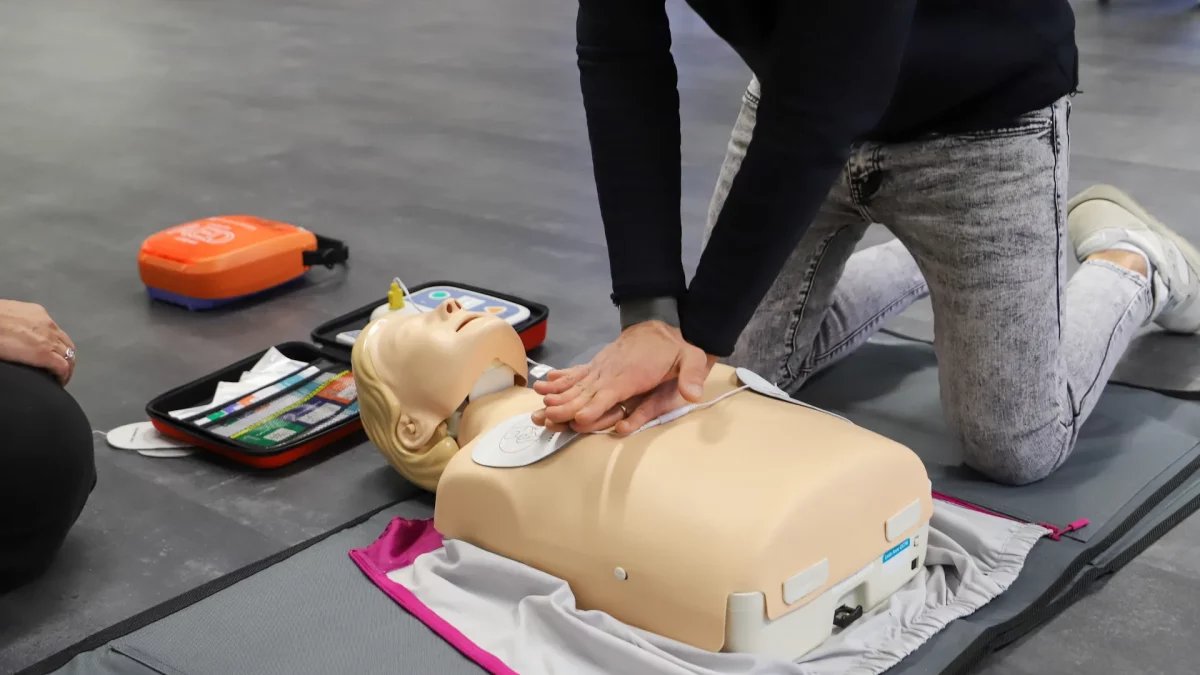
Table of contents
Knowing the life-saving actions to take at work is not merely an asset: it is an obligation and a genuine pillar of prevention. As part of an MSST (occupational health and safety management) concept, BLS-AED training (Basic Life Support – Automated External Defibrillator) plays an essential role in ensuring employees can respond effectively and safely when faced with a medical emergency.
Integrating this training into the safety action plan strengthens the prevention culture, helps meet the requirements of CFST Directive 6508 and gives every employee the right reflexes to act without delay.
This article guides you step by step in understanding where and how to position BLS-AED in your MSST plan, following a clear method adapted to Swiss companies. The objective is to ensure legal compliance, a coherent system and team confidence in emergency situations.
Understanding the link between the MSST concept and BLS-AED training
What is MSST? — A legal pillar of occupational health and safety
The MSST concept, defined by CFST Directive 6508, provides the framework for implementing an occupational health and safety management system in Switzerland. It requires every employer to ensure employee safety, assess occupational risks and plan appropriate preventive measures.
In practical terms, the MSST action plan brings together all the measures designed to protect employees: audits, training, medical monitoring, emergency procedures and internal communication.
One of the central elements of this system is medical emergency preparedness. This is where BLS-AED training plays a key role: it turns employees into first responders capable of taking immediate action before emergency services arrive.
Why BLS-AED is an integral part of the MSST action plan
BLS-AED (Basic Life Support – Automated External Defibrillator) is more than just a first aid module. It is part of a comprehensive prevention strategy: one that fosters a professional environment where safety becomes second nature.
Integrating this training into the MSST plan makes it possible to:
- ensure regulatory compliance with the requirements of CFST 6508;
- increase team responsiveness in the event of cardiac arrest, choking or a serious medical emergency;
- strengthen the safety culture by actively involving employees.
Every minute counts during cardiac arrest. Training staff in BLS-AED is therefore not a secondary choice, but a vital measure that can save lives while reinforcing the employer’s responsibility.
The role of first aid training in the company’s safety culture
First aid training acts as a catalyst for cohesion and confidence within teams. It turns the theory of the MSST plan into everyday practice.
A trained employee knows how to:
- identify risks,
- act without panicking,
- alert emergency services effectively,
- and perform the appropriate actions until medical assistance takes over.
Beyond technical skills, training develops a participatory safety culture in which every member of the company becomes an active contributor to prevention. This is the approach promoted by certified organisations such as SafetyFirst: practical learning adapted to each sector, making BLS-AED an essential shared skill.
Positioning BLS-AED in your company’s safety action plan
Identifying the needs and stakeholders of the MSST system
Before integrating BLS-AED training into your MSST action plan, it is essential to determine who needs to be trained, when and for what purpose.
The process begins with a safety audit or an MSST assessment to identify the risks specific to your company: lone working, physical activity, contact with the public, exposure to electrical or chemical hazards, and so on.
The main stakeholders to involve are:
- the safety officer or MSST coordinator, responsible for ensuring compliance with CFST Directive 6508;
- team leaders or HR managers, responsible for planning and monitoring training;
- employees designated as company first aiders, who are expected to respond first in an emergency;
- and, depending on the size of the organisation, an occupational health and safety committee responsible for overall monitoring of workplace health and safety.
This initial identification ensures a clear allocation of responsibilities and the coherent integration of BLS-AED into the prevention strategy.
Planning BLS-AED training: when and for whom?
Planning is a key stage of the safety action plan.
In Switzerland, BLS-AED SRC training is generally recommended for all employees exposed to a high level of risk (industry, maintenance, contact with the public, transport).
It should be followed by SRC refresher training every two years in order to maintain competence and update practical skills in line with the recommendations of the Swiss Resuscitation Council.
Here are some practical guidelines for integrating training into the MSST calendar:
- include BLS-AED in the annual implementation phase of the MSST concept;
- schedule sessions as part of the onboarding of new employees;
- combine the training with other risk prevention modules (fire safety, evacuation, first aid).
Well-planned training ensures greater ownership of the system and continuity of the company’s safety culture.
Example of an MSST action plan incorporating BLS-AED training
To illustrate this integration, let us consider a typical MSST action plan proposed by SafetyFirst:
| Period | Action | Objective | Responsible person | Follow-up / Evaluation |
| January | Initial MSST audit | Identify risks and priorities | Safety officer | Audit report |
| March | BLS-AED SRC training (IAS 1) | Train first responders | SafetyFirst / HR | Certificates & follow-up |
| June | Emergency simulation | Assess responsiveness and coordination | Occupational health and safety committee | Report |
| September | BLS-AED refresher training | Maintain skills | SafetyFirst | Training register |
| December | Annual MSST review | Adjust the safety action plan | Management / HR | Final report |
This model shows how BLS-AED naturally fits into the MSST process by combining training, evaluation and continuous improvement.
By applying this approach, every company can build an effective system that complies with legislation and, above all, is capable of saving lives.
Ensuring the compliance and long-term sustainability of the BLS-AED system
Complying with CFST Directive 6508 and the OPA Ordinance
CFST Directive 6508 forms the legal basis for occupational health and safety management (MSST) in Switzerland. It requires every employer to assess risks, implement preventive measures and provide employees with appropriate training.
Integrating BLS-AED training into the safety action plan directly meets these requirements. In the event of an accident, a company able to demonstrate a structured MSST concept and trained employees shows its commitment to risk prevention and the protection of its employees’ health.
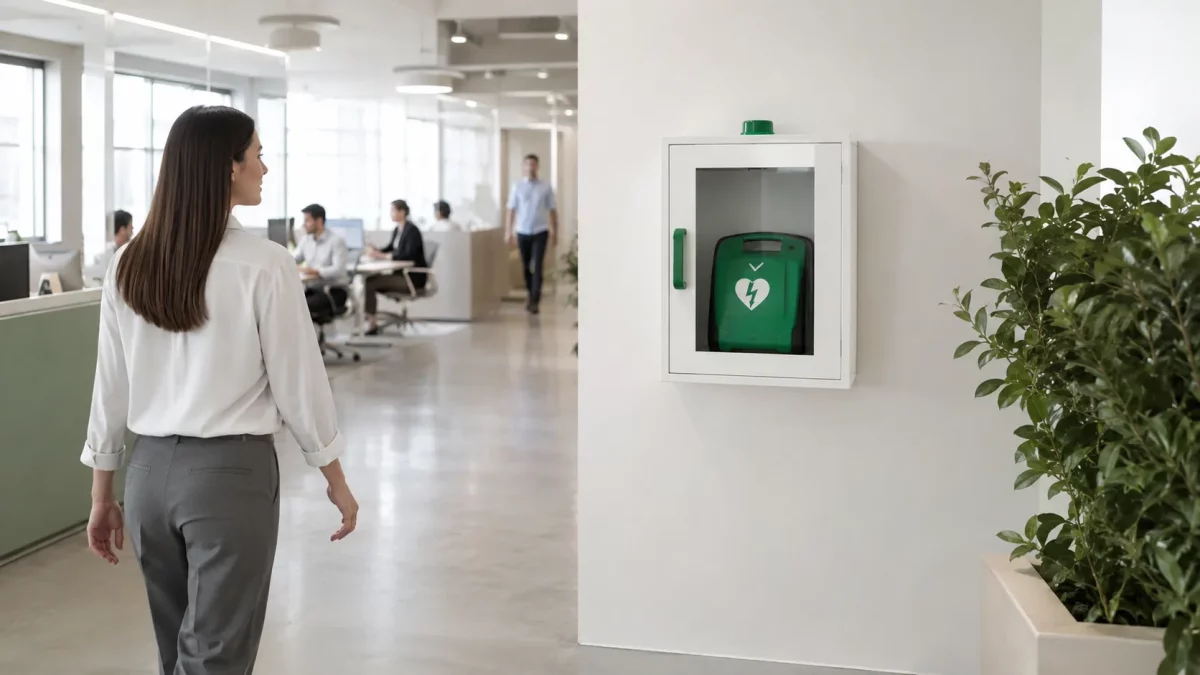
The Ordinance on Accident Prevention (OPA) complements this framework by specifying the employer’s duties regarding first aid and the provision of the necessary equipment, including the Automated External Defibrillator (AED).
Bringing your company into compliance therefore means:
- establishing clear documentation (MSST plan, training records, audit reports);
- ensuring the regular updating of BLS-AED skills;
- and scheduling an annual review to verify the effectiveness of the measures in place.
Train, refresh and document: three keys to a successful audit
An effective BLS-AED system is based on three inseparable pillars:
- Train employees according to SRC or IAS standards so that they master resuscitation techniques and the use of the defibrillator.
- Refresh skills regularly, because protocols evolve and practical skills fade over time. BLS-AED refresher training every two years is strongly recommended to maintain the quality of the response.
- Document every action: participant lists, certificates, training schedules and evaluation reports. These records provide the evidence required during an MSST audit and facilitate the planning of future sessions.
Traceability is not an administrative burden, but a management tool. It makes it possible to monitor progress, identify training needs and improve the safety culture over the long term.
Preserving the safety culture over the long term
Putting a compliant system in place is a good start. Keeping it alive over time is even better.
The long-term sustainability of BLS-AED depends on the company’s ability to embed the right reflexes in everyday practice. To achieve this:
- organise emergency exercises simulating real-life situations (cardiac arrest, medical emergency, injury);
- communicate regularly about the right first aid actions;
- recognise trained employees by appointing them as safety representatives;
- and incorporate lessons learned into the annual MSST review.
This dynamic creates a living safety culture in which prevention is not limited to a legal obligation, but becomes a shared value. With this approach, BLS-AED ceases to be a one-off training course and becomes a permanent driver of responsibility and confidence within the company.
Best practices for effectively integrating BLS-AED
Promoting a participatory and educational approach
Successful BLS-AED training is based not only on technical skills, but also on collective commitment. To strengthen the safety culture, it is essential to involve employees from the outset of the MSST action plan.
Invite them to share their experiences, ask questions and take an active part in practical sessions. This participatory approach helps embed the right reflexes and strengthens team cohesion.
The SafetyFirst trainers recommend adopting a scenario-based teaching approach: role plays, practical cases and hands-on use of the Automated External Defibrillator (AED).
Learning how to save lives then becomes a meaningful, practical and unifying experience that goes beyond the basic regulatory framework to become a civic and professional responsibility.
Using audits and emergency simulations as tools for continuous improvement
MSST audits and emergency simulations are powerful tools for assessing the maturity of the system and correcting deficiencies.
Schedule regular internal exercises recreating a cardiac arrest or serious accident. Observe team responsiveness, the quality of their actions and communication between responders.
After each simulation, conduct a structured debriefing:
- Which steps were carried out correctly?
- Which areas need improvement?
- Was the equipment (AED, first aid kit) easily accessible?
These lessons learned feed into the annual review of the safety action plan and make it possible to adjust procedures. This is how MSST develops into a process of continuous improvement directly connected to the realities of the workplace.
Relying on a certified partner such as SafetyFirst
Implementing a comprehensive programme of BLS-AED training and MSST management requires specific expertise. This is why many companies choose to rely on a certified partner.
With its comprehensive approach — audit, action plan, training and follow-up — SafetyFirst supports organisations in developing an MSST concept compliant with CFST Directive 6508.
Its trainers, accredited by the Swiss Resuscitation Council (SRC) and the Interassociation of Rescue (IAS), provide recognised training adapted to each professional environment.
Working with a qualified provider guarantees:
- comprehensive legal compliance,
- high-quality training aligned with SRC standards,
- and the long-term sustainability of the BLS-AED system within your company.
Choosing a partner such as SafetyFirst means ensuring that your employees’ safety is not left to chance, but is permanently integrated into your prevention strategy.
Additional training to strengthen your first aid skills
SafetyFirst offers several additional modules to deepen, refresh or broaden your skills in resuscitation and emergency management. This supplementary training helps you remain operational, maintain a high level of proficiency and adapt to different professional environments or needs.
- BLS-AED SRC refresher training
→ Skills maintenance, reinforced practice and algorithm updates. - Non-SRC-certified BLS-AED training
→ Comprehensive, practical module compliant with the algorithm, without official certification. - BLS-AED training – Life-saving skills
→ Short introduction to essential resuscitation and AED-use techniques. - Aquatic first aid training
→ First aid techniques in wet environments: drowning, extraction and aquatic CPR.
In summary: making BLS-AED a pillar of your safety strategy
Integrating BLS-AED into the MSST action plan is not a mere administrative formality: it is a human, responsible and essential approach to risk prevention.
This training, recognised by the Swiss Resuscitation Council (SRC), gives your teams the means to respond quickly and effectively to a life-threatening emergency while complying with the requirements of CFST Directive 6508 and the OPA Ordinance.
Putting a robust system in place means:
- ensuring your company’s legal compliance;
- developing a living safety culture in which every employee plays an active role;
- ensuring immediate responsiveness in the event of an incident;
- and strengthening collective confidence at work.
With structured support, rigorous follow-up and regular training, BLS-AED becomes a true pillar of the MSST concept — a practical tool for protecting lives, valuing skills and embedding prevention at the heart of your company over the long term.