Integrating BLS-AED into MSST: How to Plan Training in Your Safety Action Plan
16/10/2025
What Is ensa Training? A Complete Guide to the Swiss Mental Health First Aid Programme
28/11/2025
Table of contents
In the workplace, a simple reflex can save a life… or make the situation worse. All too often, when a workplace accident occurs, initial first-aid procedures are performed incorrectly: the wrong position, failing to raise the alarm or ill-advised haste can turn a manageable situation into a critical emergency.
Workplace first aid is more than a legal requirement: it is a vital skill that every employee should possess. This is why IAS 1 and IAS 2 training, recognised by the Swiss Interassociation for Rescue (IAS) and the Swiss Resuscitation Council (SRC), provides a solid foundation for responding calmly and effectively.
This article, inspired by the expertise of SafetyFirst, guides you through the most common mistakes in workplace first aid and explains how to avoid them. The objective is to strengthen the safety culture within companies, develop the right emergency response reflexes and emphasise that every action matters, especially when it has been properly learned and practised.
Understanding workplace first aid: a cornerstone of occupational safety
Workplace first aid is based on a simple principle: being ready to respond immediately to an accident or medical emergency. In a professional environment, where risks vary depending on the job — falls, burns, choking, electric shock — the speed and precision of the response can save a life.
Why every employee should know basic first-aid procedures
Basic first-aid procedures are not reserved for professional rescuers. Every employee, whether working in an office or on a construction site, should be able to recognise an emergency, secure the area, alert the emergency services and respond effectively. Simply applying pressure to a wound or performing cardiopulmonary resuscitation (CPR) correctly can make all the difference before the emergency services arrive.
Legal requirements and IAS 1 / IAS 2 training recognised in Switzerland
In Switzerland, occupational health and safety (OHS) legislation requires companies to ensure protection and risk prevention. IAS 1 training and IAS 2, certified by eduQua, meet this requirement precisely: they prepare employees to respond according to protocols validated by the SRC and the cantonal authorities.
- IAS 1: introduction to first aid, learning basic procedures and recognising vital signs.
- IAS 2: advanced training and further development, including complex scenarios and refresher training.
The key role of the workplace first aider and first responder
Designating a workplace first aider is essential for every organisation: this trained person becomes a first responder capable of ensuring the immediate safety of casualties while waiting for the emergency services. Beyond technical procedures, this person is a true prevention ambassador. Through regular training, they develop their emergency response reflexes, remain calm in the face of panic and embody collective responsibility within the company.
Workplace first aid is therefore not simply a training module, but a genuine culture: one of respect for life, solidarity and responsiveness.
The most common first-aid mistakes in the workplace
Even with the best intentions, an incorrectly performed action can have serious consequences. In companies, certain mistakes are frequently made when a workplace accident occurs. Identifying them makes it possible to adopt safer reflexes and prevent an emergency situation from becoming worse.
Failing to secure the accident area before intervening
One of the most common mistakes observed is acting in haste. Instinctively, people rush to the casualty without assessing the dangers. Yet securing the scene is the absolute priority. Before providing assistance, it is essential to check for ongoing risks: traffic, electricity, fire, falling objects, chemicals…
A workplace first aider trained in IAS 1 learns to protect others without putting themselves at risk, establish a safety perimeter and alert colleagues. This simple reflex often prevents a second accident.
Failing to check the casualty’s level of consciousness and breathing
Many people think that a casualty who does not speak is necessarily unconscious. This is false. IAS 1 training teaches a systematic assessment: speak to the casualty, gently stimulate them, then check their breathing and signs of life.
Ignoring these steps can delay cardiopulmonary resuscitation (CPR) or lead to inappropriate procedures. The initial assessment is therefore the foundation of effective workplace first aid.
Failing to alert the emergency services correctly or providing incomplete information
Another common mistake concerns raising the alarm. Calling the emergency services is important; providing them with the right information is vital.
A clear message should always include:
- the exact location of the accident;
- the nature of the incident (medical emergency, fall, electric shock, bleeding…);
- the number of casualties and their condition;
- the procedures already performed.
The emergency numbers to remember in Switzerland are: 144 (medical emergency services), 118 (fire brigade), 117 (police) and 112 (European emergency number).
Performing inappropriate first-aid procedures
Poorly performed procedures are among the most common causes of complications.
A few examples:
- In the event of choking, back blows should be firm but controlled; there is no need to strike violently.
- For severe bleeding, direct pressure should be applied to the wound, while improvised tourniquets should be avoided.
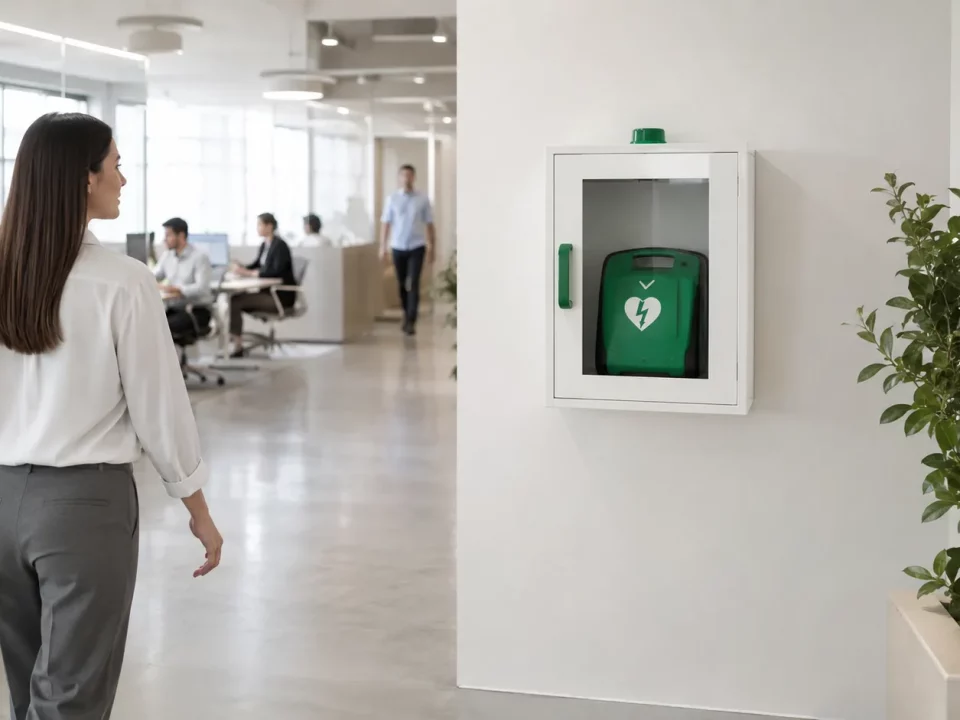
- In the event of a cardiac emergency, the priority is to call 144, use an automated external defibrillator (AED) and begin chest compressions in accordance with the SRC protocol.
These mistakes demonstrate how risky it can be to act without training. Only certified training, such as the IAS 1 and IAS 2 courses offered by SafetyFirst, ensures that participants acquire the right procedures and the confidence needed to respond effectively in the workplace.
First-aid misconceptions: when good intentions become a risk
At work, as elsewhere, emergencies are often accompanied by misconceptions. Out of fear of doing something wrong or relying on distant memories, many employees repeat inappropriate procedures. These first-aid misconceptions are one of the main causes of mistakes during a workplace accident.
“I won’t intervene; I’m not trained”: the fear of taking action
This phrase is often heard, especially when faced with a medical emergency or loss of consciousness. Yet doing nothing can sometimes be more dangerous than acting cautiously. IAS 1 training helps overcome this fear by providing the basics: protect, alert, assist.
Even a simple action, such as securing the area or calling 144, can save a life. Workplace first aid is above all about responsiveness and composure, not technical perfection.
“I remember my training from ten years ago”: the lack of refresher training
Emergency response reflexes are quickly forgotten. According to the recommendations of the Swiss Resuscitation Council (SRC), it is advisable to complete IAS 2 refresher training every two years to keep skills up to date.
Procedures evolve, techniques change, and regular practice helps maintain the coordination required during resuscitation or severe bleeding. Updating knowledge ensures safe, precise and effective procedures at the crucial moment.
“I’ll do what I’ve seen in films”: spectacular but dangerous actions
Lifting a casualty, slapping them to “wake them up” or giving them water after a shock… these actions are still observed far too often. In reality, they make the situation worse.
Workplace first-aid training teaches participants to assess the situation calmly, respect the casualty’s physiology and avoid any risky handling.
The workplace first aider should rely on simple, scientifically validated procedures: the recovery position, chest compressions and breathing checks. Nothing spectacular, but everything needed to save a life.
Breaking free from misconceptions also means recognising the importance of continuing training. This is what distinguishes a good reflex from false confidence.
How to avoid these mistakes through IAS 1 and IAS 2 training
Responding correctly at the right moment cannot be improvised. IAS 1 and IAS 2 training provides safe, validated procedures adapted to all the situations encountered in the workplace. These modules, offered by SafetyFirst, are based on the official standards of the Swiss Interassociation for Rescue (IAS) and the Swiss Resuscitation Council (SRC) to ensure comprehensive and rigorous learning.
Certified and recognised training: IAS, SRC, eduQua
The IAS 1 and IAS 2 courses are not simply awareness sessions. They are recognised nationwide and certified by eduQua, a mark of quality for professional training in Switzerland.
The programme includes:
- a clear theoretical approach based on the recommendations of the SRC;
- practical exercises supervised by certified instructors;
- official validation of the level achieved at the end of each module.
This training ensures a genuine command of first-aid procedures, adapted to each professional context.
A practical approach focused on real-life responses
SafetyFirst places the emphasis on practical training. Participants are immersed in realistic emergency situations: electric shock, choking, cardiac emergency, bleeding or a fall. Each scenario helps strengthen emergency response reflexes, stress management and team coordination.
This immersion creates strong automatic responses: check safety, assess the casualty, alert the emergency services and intervene. These steps become ingrained reflexes, essential to effective workplace first aid.
The role of refresher training and skills updates
First-aid procedures are not learned once and for all. IAS 2 training includes regular refresher training, which is essential for maintaining the first aider’s confidence and effectiveness.
Updates include the latest SRC recommendations, technological developments such as the use of an automated external defibrillator (AED) and feedback from real-world experience.
By completing this training, every workplace first aider becomes a strong link in the safety system: capable of responding with precision, calm and effectiveness during the most decisive minutes.
Practical benefits for the company and its employees
Training employees in workplace first aid is not just about complying with the law: it is an investment in safety, cohesion and confidence. A well-prepared company responds more effectively in an emergency and significantly limits the consequences of an accident.
Fewer aggravated accidents, greater collective responsiveness
Every minute counts during a workplace accident. An employee trained in IAS 1 or IAS 2 knows how to assess the situation quickly, raise the alarm effectively and perform essential first-aid procedures.
This responsiveness reduces the risk of complications and enables professional rescuers to intervene under the best possible conditions. A trained team creates a smooth chain of action in which everyone knows their role.
A stronger climate of trust and safety
When employees know they can rely on one another, a lasting sense of safety takes hold. Training in basic first-aid procedures creates a culture of mutual assistance and shared responsibility.
Employees become more attentive to their surroundings, calmer in crisis situations and more supportive of one another. This leads to a better working atmosphere and greater commitment to the company.
Compliance with OHS and MSST requirements
Swiss companies must comply with occupational health and safety (OHS) standards and the MSST occupational health and safety model.
By relying on IAS 1 and IAS 2 certified training, SafetyFirst helps organisations meet legal requirements while strengthening their prevention efforts.
Basic first-aid procedures cannot be improvised: they must be learned, practised and refined. Through IAS 1 and IAS 2 training, every employee can become a key contributor to workplace prevention.
By investing in these skills, companies do more than avoid mistakes: they develop a genuine safety culture based on responsibility and solidarity.
SafetyFirst supports this approach with professionalism and commitment.
➡️ Discover IAS 1 and IAS 2 training and turn every reflex into a life-saving action.