How to use a fire extinguisher effectively: a practical guide to acting quickly in the event of a fire
24/06/2025
CFST Directive 6508: Understanding and Implementing the MSST System
27/07/2025
Why is it essential to understand fire classifications?
When a fire breaks out, every second counts. However, the appropriate response depends on the type of fire you are facing. This is where fire classification comes in: a simple yet fundamental system for identifying the nature of the hazard and selecting the appropriate extinguishing equipment.
Indeed, not all fires are alike: a wood fire in a fireplace cannot be tackled in the same way as a deep fryer in flames or a burning gas leak. This is why fires are classified into standardised categories (A, B, C, D, F), according to the type of fuel involved.
Here is why this classification is so important:
- It helps you understand how fire behaves (spread, temperature and residues).
- It helps prevent response errors (using water on an oil fire can make the situation worse).
- It indicates the right extinguishing agent to use (water spray, multipurpose powder, CO₂, etc.).
- It is the foundation of all fire safety training, both in the workplace and at home.
Whether you are a private individual or a professional, knowing the fire classes means being able to respond effectively while protecting yourself and limiting damage. It is also the first step towards genuine fire prevention, whether in an office, workshop or family home.
The 5 main fire classes: simple explanations and examples
Fires are divided into five main categories, each corresponding to a type of burning material. This classification makes it possible to identify the risk quickly and respond with the appropriate extinguishing equipment.
Class A – Ordinary combustible materials
These are the most common fires. They involve materials such as wood, paper, cardboard, textiles and certain plastics. They can occur at home, in offices or in warehouses. These fuels produce embers and spread through heat.
Suitable extinguishing equipment: water spray, foam, multipurpose powder.
Class B – Flammable liquids
Petrol, solvents, paints, alcohol and hydrocarbons belong to this category. This type of fire is particularly dangerous because of the volatility of these products and the risk of explosion.
Suitable extinguishing equipment: AFFF foam, multipurpose powder, CO₂.
Class C – Flammable gases
This category includes fires involving butane, propane, methane and other gases used in industry or at home. Extinguishing such a fire always requires shutting off the gas supply—never attempt to extinguish the flames alone.
Suitable extinguishing equipment: powder, only after the gas supply has been shut off.
Class D – Combustible metals
Less common but very difficult to control, these fires involve metals such as magnesium, aluminium and sodium. They mainly occur in industrial environments or laboratories.
Suitable extinguishing equipment: special “Class D” powders only.
Class F – Cooking fats and oils
Specific to kitchens, this class covers fires involving deep fryers or pans containing animal or vegetable fats. They are extremely intense and must never be treated with water.
Suitable extinguishing equipment: a Class F wet chemical extinguisher or fire blanket.
Which extinguisher for which type of fire? The practical guide
For an extinguisher to be effective, it must be suitable for the type of fire. Each extinguishing agent works according to a specific physical or chemical principle: cooling, smothering, interrupting the chain reaction or isolating the fuel. Choosing the right equipment is therefore essential for controlling a fire quickly and safely. Discover our extinguisher training >
The different extinguishing agents
Several types of extinguishing agents are used in fire extinguishers. Each offers specific advantages depending on the situation:
- Water spray: effective on Class A fires, it cools the fire and prevents re-ignition.
- Foam (AFFF): useful for liquid fires (Class B), it isolates the fuel from the air.
- Multipurpose powder (ABC): works by smothering the fire and interrupting combustion. It is effective on Classes A, B and C.
- CO₂ (carbon dioxide): recommended for electrical or liquid fires. It leaves no residue, but is not suitable for confined spaces.
- Special agents: designed for metal fires (Class D) or cooking fires (Class F), they require dedicated equipment.
Matching the right extinguisher to each fire category
An extinguisher’s label always indicates the fire classes it can extinguish. Here are the most common matches:
- Water extinguisher: Class A only.
- Foam extinguisher: Classes A and B.
- ABC powder extinguisher: Classes A, B and C – versatile and ideal for mixed-use buildings.
- CO₂ extinguisher: Class B and energised electrical equipment.
- Class D extinguisher: for metal fires only.
- Class F extinguisher: for cooking oil and fat fires.
Mistakes to avoid
Some inappropriate interventions can make the situation worse:
- Using water on burning oil causes a violent flare-up.
- Spraying an extinguisher onto energised equipment without first checking its type can result in electric shock.
- Using an extinguisher that has not been inspected or properly maintained compromises its effectiveness.
A closer look at eco-friendly and modern fire extinguishers
Fire extinguishers are evolving: some manufacturers now offer PFAS-free models (persistent fluorinated substances) to reduce their environmental impact. Others are innovating with water mist systems or connected extinguishers that can send an alert in the event of a pressure drop or non-compliance.
Choosing an extinguisher also means considering its maintenance, service life and suitability for the installation location. A good extinguisher is only useful if it is properly selected, positioned and maintained.
Thank you, let’s continue with the next section in the same spirit. Here is the next section:
Household fire extinguishers: what should you choose for your house or flat?
Even at home, a fire can start at any time. A short circuit, cooking left unattended, a candle placed too close to a curtain… Household risks are numerous. Having a suitable extinguisher is not a legal requirement in Switzerland for private homes, but it is an important fire prevention measure.
Assessing common household risks
Before choosing an extinguisher, it is useful to identify potential sources of fire in your home:
- Kitchen: the main place where fires start (fats, oils, ovens and electrical appliances).
- Living room and bedroom: textiles, candles, chargers and cigarettes.
- Basement or garage: storage of flammable products, batteries or electrical DIY equipment.
Identifying these areas makes it easier to adapt your protection.
Choosing a versatile and compact extinguisher
For household use, the ideal extinguisher is often an ABC powder or foam model:
- It covers Classes A and B (and sometimes C, depending on the model).
- It is easy to use and requires no complex maintenance.
- It is available in compact sizes (1 or 2 kg), which are convenient for discreet wall mounting.
In addition, a fire blanket is strongly recommended, particularly in the kitchen.
Where should it be placed for rapid intervention?
An extinguisher should be:
- Visible and easily accessible, even in stressful situations.
- Mounted near risk areas, without being too close to the potential fire.
- Installed at a height of between 1.0 and 1.5 m for quick access.
Avoid cluttered or enclosed locations (cupboards, deep drawers), and make sure that everyone living in the home knows how to use it.
Tips for safe use
- Check the pressure once a year (the gauge should be in the green zone).
- Never operate an extinguisher just to test it: this could reduce its effectiveness.
- If you have lithium-ion batteries (bikes, scooters or smartphones), find out about specific models suitable for this risk.
At home and elsewhere, a properly chosen and positioned extinguisher can make all the difference in the event of an incident.
Facing a fire: the right actions in an emergency
When a fire breaks out, panic can quickly take over. However, keeping calm and taking the right actions in the first few seconds can often limit damage and even save lives. Knowing how to respond when a fire starts is just as important as having an extinguisher.
How should you respond when a fire starts?
Before taking action, you need to assess the situation:
- Is the fire contained, or is it already spreading?
- Is there a safe escape route?
- Does the fire involve electrical equipment, a deep fryer or a gas line?
If the fire is small, contained and you have the appropriate extinguisher within reach, you can attempt to put it out. Otherwise, evacuation takes priority.
When should you attempt to extinguish a fire? When should you evacuate?
An extinguisher is useful only if:
- The fire is at an early stage and accessible.
- You have the right type of extinguisher.
- You know how to use it.
In all other cases, evacuate immediately, close the doors behind you to slow the spread of the flames, and call the emergency services as soon as possible. Remember that smoke kills more people than the fire itself.
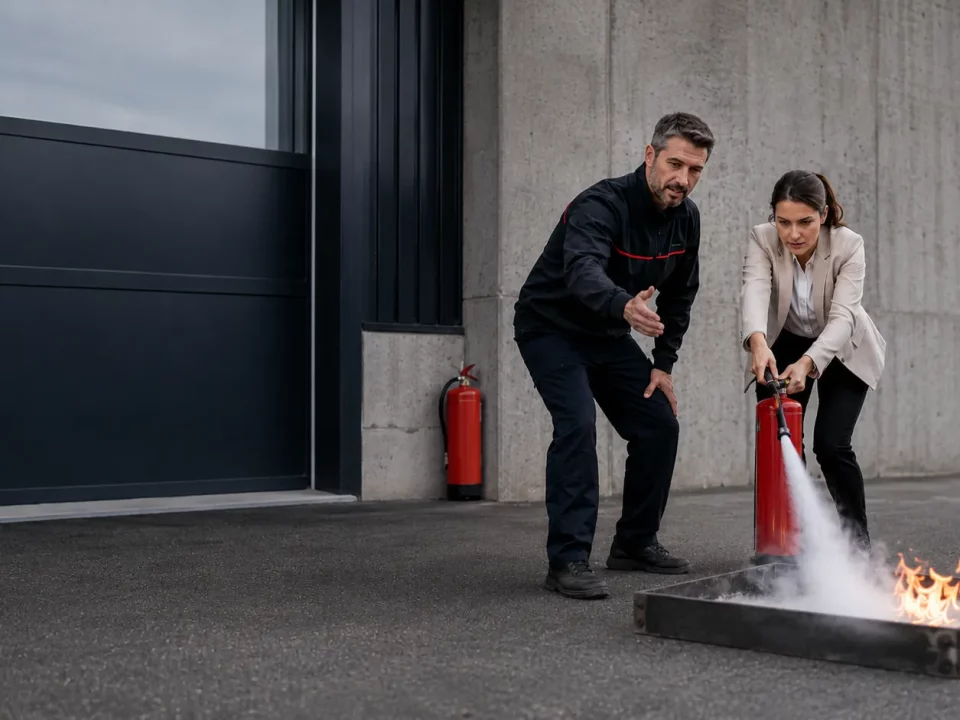
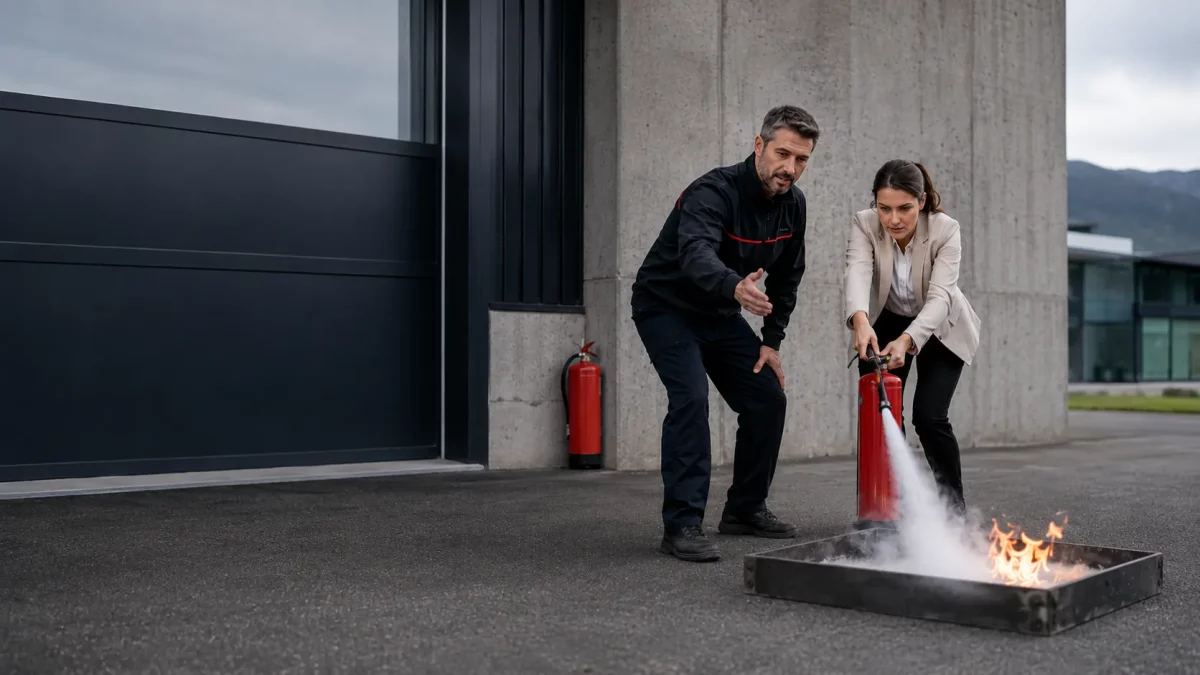
Using a fire extinguisher: 4 simple steps
- Remove the safety pin.
- Briefly test the extinguisher away from the fire.
- Aim at the base of the flames, not at their tips.
- Sweep from side to side, from left to right.
Use short bursts if the extinguisher allows this, so that the charge is conserved in case the fire reignites.
Find out more in our practical guide to using a fire extinguisher.
The importance of rapid and organised evacuation
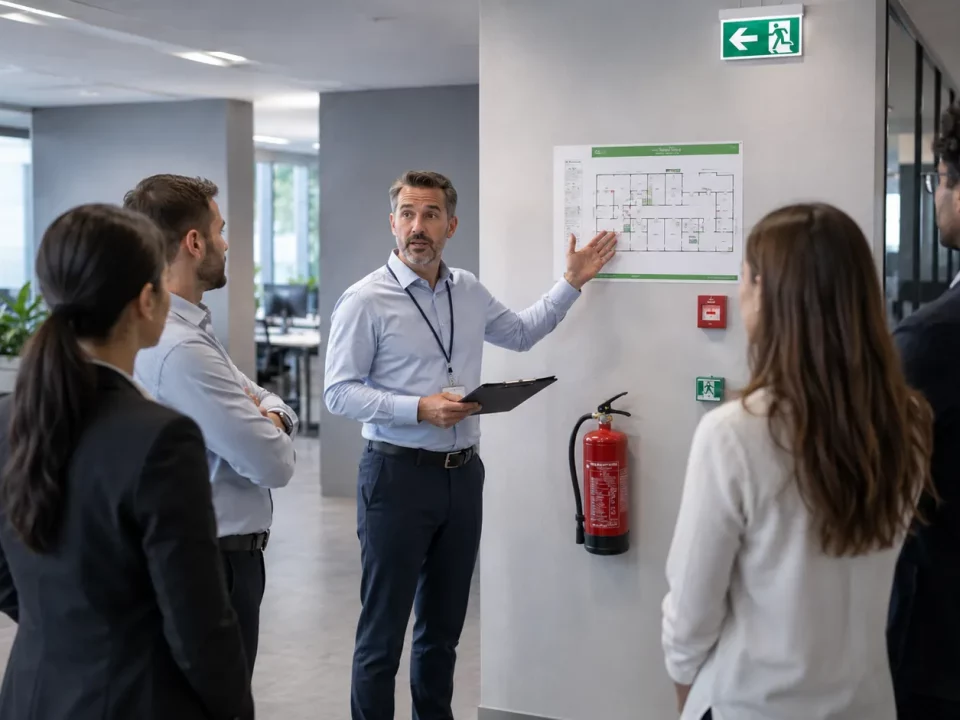
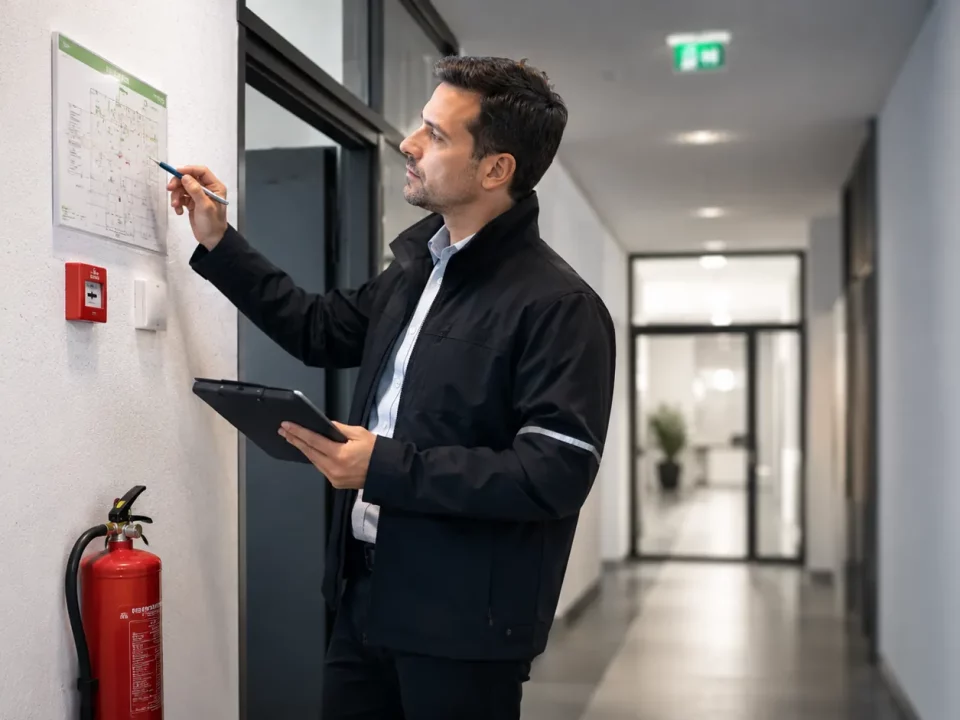
Every home or building should have a clear evacuation plan, even a basic one. At home, discuss it with the children: where to exit, where to meet and who to call. In businesses, fire safety training helps make these responses automatic and enables teams to act effectively together.
The best intervention is always the one that has been prepared in advance.
Why take fire safety training with SafetyFirst?
Having an extinguisher is not enough: you also need to know when and how to use it, often in a stressful situation. This is where fire safety training really proves its value. Learning how to respond to a fire means turning an instinctive reaction into a controlled response, with calm and efficiency.
The benefits of practical, supervised learning
At SafetyFirst, training in effective fire management is designed to make every participant active and confident. Far from being classroom-based theory, the sessions rely on practical exercises: hands-on use of fire extinguishers, simulated fire outbreaks, evacuation procedures and risk identification.
The aim: to leave with automatic responses that are useful both in professional and personal settings.
Realistic simulations and safe use of fire extinguishers
Trainees use professional equipment on controlled fires. This allows them to:
- Experience the pressure of a real extinguisher.
- Learn to aim correctly and act quickly.
- Understand the limitations and conditions of use of each type of extinguishing agent.
This educational format enables the lasting integration of safety procedures.
Suitable for businesses, public organisations and private individuals
SafetyFirst offers training on site, at your premises or at its centres in French-speaking Switzerland. The modules are adaptable to your needs, the number of participants and the level of risk identified. Whether you are a facility manager, parent, tradesperson or member of a safety committee, you can find a suitable solution.
Useful and accessible safety awareness for everyone
Understanding the different types of fire, choosing the right fire safety equipment and knowing how to act without putting yourself at risk: these are valuable skills that anyone can acquire. Prevention starts with information, but it is strengthened through action. Fire safety training is a concrete step towards greater safety for yourself, others and your surroundings.
How should you respond to a deep-fryer fire? (practical scenario)
Here is a practical example of a situation at home, with the recommended actions explained step by step:
- Immediately turn off the heat source
Turn off the hob or deep fryer without attempting to move the container. - Under no circumstances use water
Water causes burning oil to flare up violently. This makes the fire worse. - Cover the fire with a fire blanket
Carefully place it over the pan or deep fryer to smother the flames. - Use a Class F extinguisher if you have one
These extinguishers are designed for oil and fat fires and prevent dangerous splashing. - If the fire does not go out, evacuate and call the emergency services
Close the kitchen door to limit the spread, then leave quickly.
Fire management FAQ
Can water be used on an electrical fire?
No. Water conducts electricity and can cause electric shock if the appliance is energised. In the event of an electrical fire, use a CO₂ or powder extinguisher and disconnect the power supply as soon as possible.
Is an ABC extinguisher sufficient for the home?
Yes. An ABC powder extinguisher is suitable for most household risks: solid materials, flammable liquids and gases. It is a good versatile solution, especially when complemented by a fire blanket in the kitchen.
How long does a fire extinguisher last?
On average, a fire extinguisher has a service life of 10 to 20 years. To remain effective, it must be checked every year, including its pressure and general condition, and replaced if necessary.